
The United States 2026 Midterm Elections
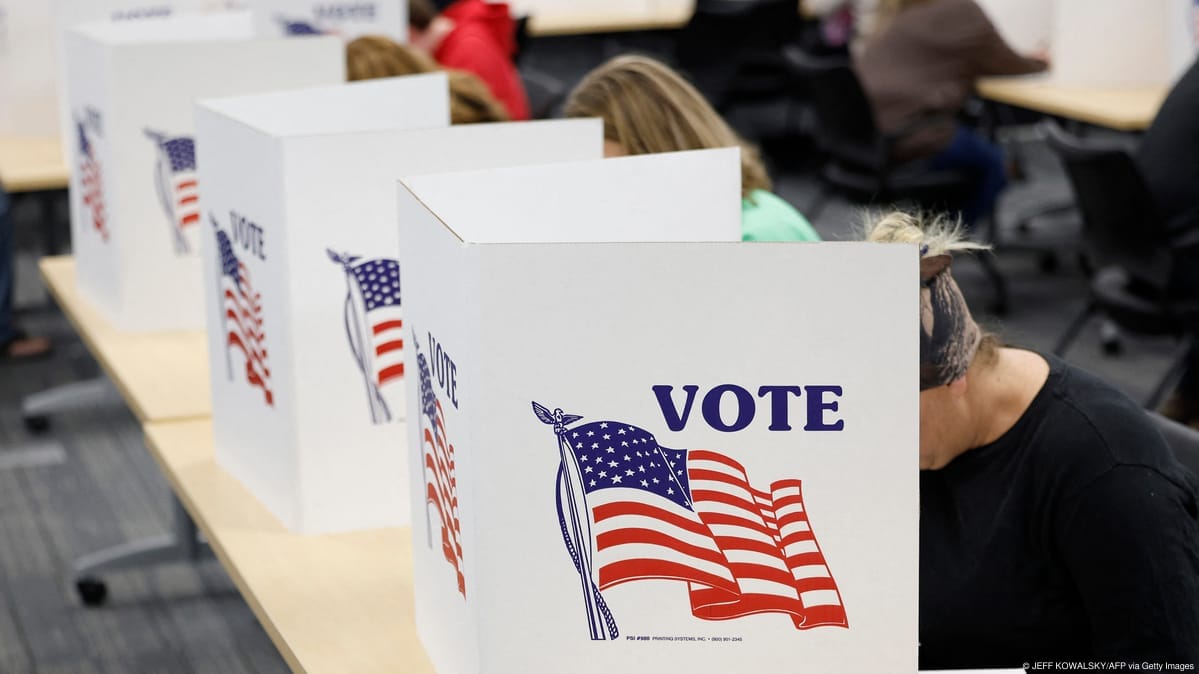
On November 3, Americans voted for their new congressional representatives, leaving the rest of the world to watch closely as the election results would define the balance of political power in Washington for the next two years to come. In a sweeping victory, Democrats won control of the House and the Senate, ending two years of Republican control in both chambers. Democrats were able to gain momentum in states that have traditionally leaned Republican for decades, with the most notable states being Texas, Mississippi, Kansas and South Carolina. According to Brookings, tariffs, the war in Iran, immigration enforcement, and growing concerns about governmental corruption were all main concerns for voters this year.
Regardless of the electoral outcome, it is still important to consider that the election results only measured who won, instead of whether Americans agree on where the country’s future is heading. This raises questions beyond the results of the midterm election: Is the United States still united under a shared vision about its future? How do these shared or conflicting visions impact U.S. regional and international cooperation?
Is There a Shared Vision in the U.S.?
In the ECOOPx framework, the idea of a shared vision is the capacity to build a meaningful common future despite differences, drawing on elements such as empathy, creativity and emotional commitment. In the case of the U.S., the concept of a shared vision among U.S. citizens is complex. From a broader perspective, U.S. society has been shown to share a vision: one that is grounded in promoting democratic ideals and equal rights. In a 2024 nationwide survey, 63% of Americans believe that the country is united by the founding ideals of equal rights, while 33% of Americans point to shared history and traditions.
How this broadly shared vision is implemented is heavily contested among the country’s two major parties: the Democratic Party and the Republican Party. The U.S. therefore faces a political divide. Although citizens share a common vision rooted in democratic principles, a shared vision remains largely abstract as both parties disagree on how these ideals should be put into practice.
American society’s outlook on the future gives a glimpse into whether a common horizon still remains despite political divisions. A survey conducted by Pew Research in 2025 revealed that 59% of U.S. adults believe that the country’s best years are in the past, while 40% of U.S. adults believe that the best years are ahead. Another survey conducted in 2026 reveals that 33% of U.S. adults believe that the nation will be less politically divided in 2050, up from 21% in 2023. The slight rise in optimism concerning future political division shows that there is openness to a united future, however the percentage is still relatively low. This suggests that hope for stronger unity is not yet widely shared in American society. When looking ahead into the future, Democrats and Republicans are almost equally pessimistic about the future of the U.S. in 2050, with about 2 in 3 U.S. adults in each party saying that the country will be more politically divided. This suggests that both parties agree on the problem but not the solution. A common future may be envisioned among parts of American society, however the statistics suggest that society undermines the country’s future direction and its ability to become united.
A shared vision does not require total cooperation, but it does require differences to be integrated into a common horizon. Whether differences can be integrated remains an open question and evidence of future integration remains uncertain. Only 46% of Democrats and Democratic leaners believe that it is very important for Democratic officials to compromise with Republicans, whereas 39% of Republicans and Republican leaners believe that it is very important that Republican officials compromise with Democrats. Yet, on the other hand, 78% of Democrats/Democratic leaners and 71% of Republicans/Republican leaners believe that it is very important for the other party to compromise. Compromise is supported by both parties, but is largely demanded of the other side. A vision depends on integration and it cannot sustain if both parties do not show willingness to initiate cooperation. In the case of the U.S., the idea of a sustainable shared vision is therefore divided and fragile as each side expects the other to move first.
How Does This Vision Compare Abroad?
There is also a clear divide in how Americans see themselves on the global stage. A majority of Americans (57%) believe that the U.S. contributes to peace and stability. This perspective varies across partisan lines, with 82% of Republicans/Republican leaners holding this belief compared to only 35% of Democrats/Democratic learners. This is a notable gap between the two parties. Both parties give opposite answers to how the U.S. operates in the international community. The perspective of other countries beyond the U.S. illustrates a different perspective. Majorities in most of the 36 countries surveyed expressed that the U.S. does not take into account the interests of other countries when it comes to international affairs.
The concept of a shared vision is challenged both in the U.S. and in the international community. While Americans may be divided on how they see themselves in the international community, a survey of 36 non-U.S. countries revealed that relatively few respondents believe that the U.S. takes other nations’ interests into consideration when it comes to foreign policy. The ECOOPx framework labels trust as a core rational dimension of sustainable cooperation. There is a sense of uncertainty as U.S. administrations often shift their foreign policies significantly depending on what party is in control. Therefore, domestic political division and inconsistent foreign policy can weaken the international community’s trust in the U.S. and its willingness to cooperate with allies abroad.
Cooperation on the Domestic and International Level
The ECOOPx framework finds that sustainable cooperation in intercultural conflict and crisis is rooted in a shared vision. This shared vision inspires and mobilizes citizens, allowing differences to be addressed. It is important to consider the political and cultural differences among each individual state in the U.S., especially as each state tends to have its political leanings towards one of the two parties. Although both parties broadly support the vision of upholding democratic principles, the two parties diverge in terms of economic policies and social issues, making cooperation and agreement oftentimes difficult among American society.
At an international level, a shared vision is built primarily on stable alliances. However, as of recently, the lack of trust and cooperation between the U.S. and other countries can strongly be seen in North American and European countries. One of the most recent notable examples is the U.S.’ relationship with Canada. According to the Council on Foreign Relations (CFR), the U.S.’ relationship with Canada, one built on shared geography and partnership, now faces a strained alliance due to the tariffs the current administration imposed. This example shows how conflicting values can undermine cooperation, since sustainable cooperation becomes difficult once trust is weakened.
Conclusion
The outcome of the midterm elections has revealed that both of the chambers will now be controlled by Democrats for the next two years, while there is a sitting Republican in the White House. It is important to understand that the outcome of the election does not solidify whether or not U.S. society has a shared vision. Though American society agrees on the fundamental democratic ideals that uphold the “American vision,” the understanding of how such ideals should be put into practice still creates division among U.S. society.
History has shown that cooperation between the two parties is not entirely impossible. One of the best known historical accounts is the Civil Rights Act of 1964. The proposed bill faced many difficulties when introduced, which included a long filibuster in the Senate and the inability to pass without bipartisan support. Both parties worked together to garner support for the bill, which successfully led to the Senate vote being 73 to 27. Such historical cases show that cooperation and integration are not impossible in U.S. politics, though they depend on leaders willing to move first to work towards upholding a shared vision rooted in democratic principles and equal rights.
This historical example should not be interpreted as political division can easily be overcome. The next two years will require the U.S. government to work to find common ground in order to sustain a shared vision that unites a polarized American society, while simultaneously navigating division beyond its borders.